
Indigenous enterprises not only bring in money but also help the cultural side by keeping the tribes’ identity, taking care of the traditional knowledge, and using green methods. Overall, they always put back their profits in projects for the community, education for children, and other eco-friendly initiatives.
TL;DR
- Indigenous people own and run these businesses independently today.
- They operate in many sectors like tech and tourism.
- Ownership and decision-making power stay within Indigenous leadership teams.
- These businesses create jobs and community economic stability growth.
- They protect culture, identity, traditions, and Indigenous community values.
Key Points
- Indigenous owned and operated businesses are entirely managed by Native communities, thereby guaranteeing that the community leads the leadership, planning, and operations. These are found in various forms, from family-operated shops to large corporate giants in various sectors such as construction, health care, tourism, education, and digital services.
- The most significant advantage these businesses possess is that through their ownership and decision power they can keep outside control at bay and thus support self-determination.
- Not only do these businesses contribute directly to the local job market, skills development and incomes, but they also create sustainable economic development for Indigenous communities.
- The cultural identity, on the other hand, is protected through the use of Indigenous values, traditions, languages, and teachings in business activities.
What Are Indigenous Owned and Operated Businesses?
Indigenous owned and operated businesses are those that are entirely or mainly owned by Native individuals and are also run and controlled by community-led leadership. The First Nations owners would have a say in the business, not just as investors, but as the ones who take over, make the most important and the right decisions, and thus, set the business’s course in accordance with the community’s needs and values.
Such businesses are available in almost every sector. They could be family-run shops, local service providers, or larger companies that have engaged in industries like construction, healthcare, travel, education, technology, and manufacturing. Many operate as community-oriented businesses that help the community economically by providing local job opportunities.
The major criterion distinguishing the completely Indigenous-led businesses from those that use the name is the combination of ownership and the power to make decisions. When the community retains its leadership, these businesses have a more powerful, long-lasting effect by keeping the money, jobs, and opportunities for growth in the Indigenous communities, besides the fact that they also aid in preserving the culture and identity.
Why Indigenous Owned Businesses Matter in 2026
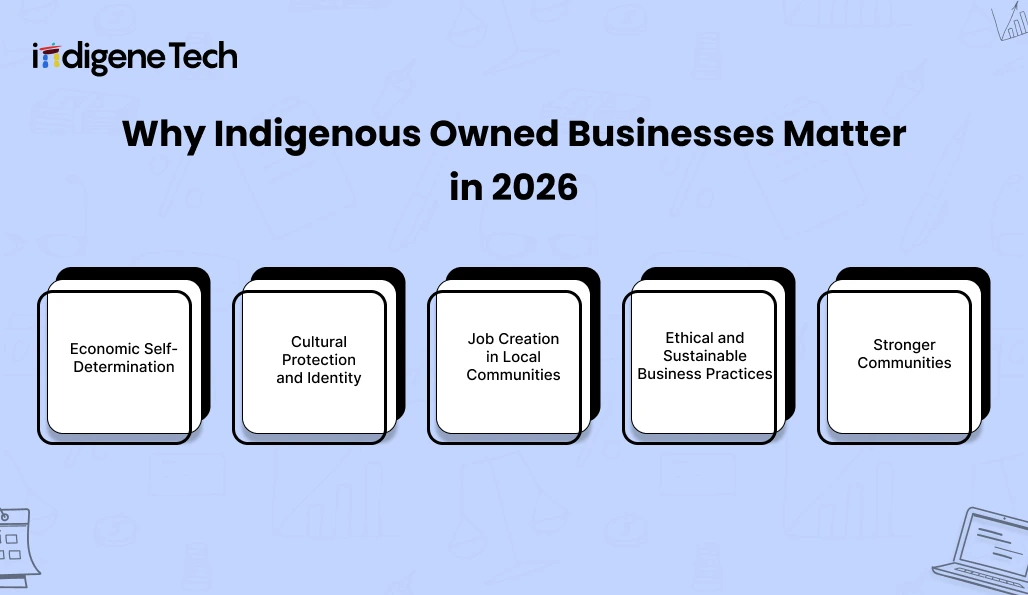
By 2026, companies that are owned and managed by indigenous people will play a vital role in the local economy, as they are the main source of and the protector of cultural identity and the provider of opportunities that are sustainable in the long run. They will be the foundation of self-rule, ethical trade, and environmentally friendly growth, and they will also be the main provider of resources for the maintenance of the community, education, health, and children’s programs.
1) Economic Self-Determination
Indigenous business ownership builds financial independence for communities. It helps shift economic power back into Indigenous hands, reduces dependency on outside systems, and supports long-term stability. Local ownership creates stronger economies based on community needs and priorities.
- Builds financial independence for communities
- Keeps money circulating locally
- Reduces reliance on outside businesses
- Encourages local entrepreneurship and ownership
- Creates long-term community-driven growth
2) Cultural Protection and Identity
Indigenous people businesses have very strong ties to culture and community values. They maintain their identity by incorporating Native language, art, traditions, and teachings. This way, they not only share their heritage but also tell authentic stories through their products and services.
- Preserves Indigenous traditions and values
- Promotes Indigenous language and storytelling
- Supports cultural art, design, and heritage
- Builds pride and identity in younger generations
- Shares Indigenous knowledge through products/services
3) Job Creation in Local Communities
Native communities that own and operate their businesses contribute to the local economy by the good of the new jobs and training programs. Their labor force consists of the youth, women, and the skilled, which leads to an increase in household income, a decrease in unemployment, and ultimately a rise in the community’s living standard through continuous employment.
- Creates local employment opportunities
- Supports youth career development
- Provides opportunities for women entrepreneurs
- Builds skills and professional experience locally
- Strengthens household income and stability
4) Ethical and Sustainable Business Practices
Indigenous entrepreneurs usually give priority to responsible and sustainable growth. Their business approach is characteristically long-term; that is, they take into account the profits, but at the same time they do not neglect the respect for the land, people, and the resources. In this way, ethical decisions, fair labor, and environmentally friendly operations are also supported for the coming generations.
- Focuses on long-term impact, not short-term profit
- Promotes environmentally responsible decisions
- Encourages fair wages and safe work practices
- Supports sustainable supply chains
- Protects land and community resources
5) Stronger Communities
Indigenous owned enterprises fortify their communities through the infusion of the profits into the local developmental activities. The money usually goes to education, healthcare, youth and cultural programs. This results in a cycle of community growth in which success directly enriches the lives of the people and establishes better ties.
- Reinvests profits into community programs
- Supports education and scholarships
- Improves local healthcare and well-being
- Funds youth and cultural initiatives
- Encourages stronger community connections
5 Key Steps to Grow Indigenous Businesses in 2026
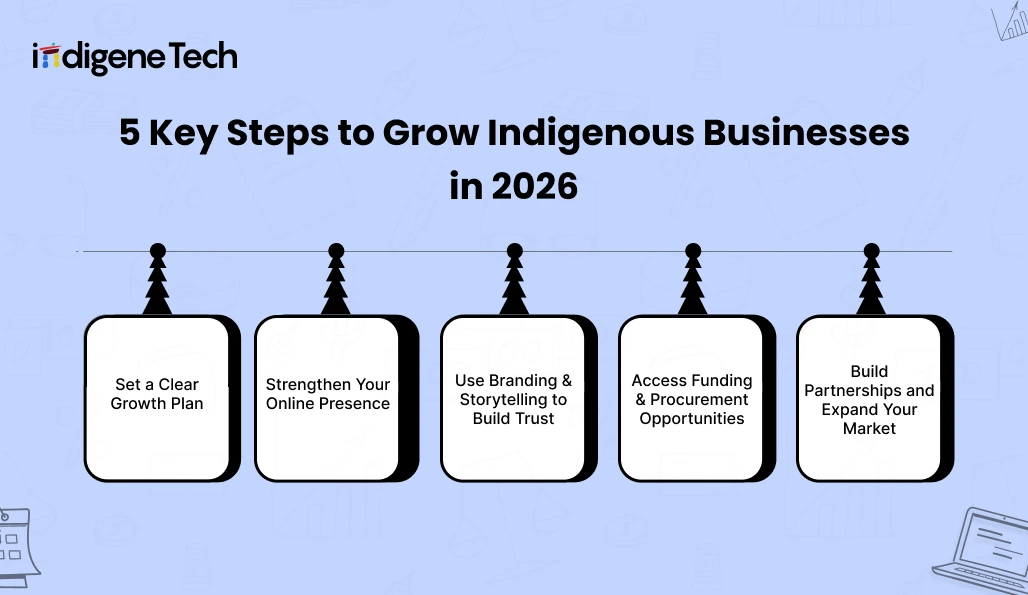
The year 2026 sees the need for a well-thought-out approach, the use of technology for marketing and sales, and partnerships with the community as the main requirements for the growth of the firms owned by the natives. Such businesses can not only operate on a larger scale but also, at the same time, promote the unity of the cultural values and the environmental sustainability practices through their being and doing.
1) Set a Clear Growth Plan
Starting with a well-defined growth plan that comprises the business goals, target customers, pricing and expansion strategy is vital. A solid roadmap leads you to take the right decisions. allocate funds efficiently, and minimize risks. Trace the path of your Indigenous business by revealing its uniqueness and how it addresses customer concerns. Go through your plan frequently, measure the results, and modify the steps to ensure constant growth.
2) Strengthen Your Online Presence
Online visibility in 2026 is a requirement for making business growth. A mobile-responsive site which delivers a complete view of your services, values, and contact details is a necessity. Optimize and polish your Google Business Profile so that it is very easy for potential clients to find you. Keep your social media presence regular by posting, informing and interacting in a timely manner. A strong online reputation is the reason that customers are not only attracted to you but also kept with you through trust.
3) Use Branding & Storytelling to Build Trust
Indigenous companies have an undeniable and powerful advantage, as they possess genuine identity, mission, and community benefits. The use of branding is paramount in clearly expressing your identity and what you claim to be. Make your story known through your site, social media, and product messages. Present the traditions, respectfully, along with the values and impact. Trust, loyalty, and sustainability of business support for the company are all increased through effective storytelling.
4) Access Funding & Procurement Opportunities
In 2026, you might want to look at funding programs such as Native business grants if you’re going to need financial assistance, community funding, and government support. Besides, there exist different nonprofit organizations that offer procurement opportunities with preference given to vendors fully owned and managed by people from the First Nations community. Be sure to prepare all the necessary docs, i.e., business registration, capability statements, and service packages. Building a strong presence not only brings you contracts and partners but also reliable and good profits for a long time.
5) Build Partnerships and Expand Your Market
Alliances between businesses that are Native-owned result in a quicker and broader customer base. Refer, run joint campaigns, and use resources together with other community-led businesses. Partnership with First Nations business networks, chambers, and local associations for a connection. Gain more exposure by participating in trade shows, expos, and community events. Get into new channels such as eCommerce, online marketplaces, or B2B contracts for steady growth.
Key Industries Where Indigenous Businesses Are Growing in 2026
The year 2026 is characterized by a boom in Native entrepreneurship, which is not restricted to a particular sector but is found in numerous high-growth sectors. Indigenous communities are moving towards more and more sectors that integrate innovation, community development, and cultural power. The sectors of technology, construction, tourism, arts, food, and education are among the ones in which community-owned and community-managed companies are creating jobs, preserving cultures, and most importantly, building sustainable economic growth while also catering to the demands of the modern market, thus, bringing about positive change.
- Technology & Digital Services: Indigenous tech firms are offering a variety of products such as apps, e-learning platforms, AI language tools, and cloud solutions that come with high security for the communities they serve.
- Construction, Infrastructure & Skilled Trades: A sizable Indigenous sector is working with the government and other sectors through housing, roads, and various energy projects, utilizing procurement opportunities and forming partnerships.
- Tourism & Cultural Experiences: The Indigenous tourism circuit is offering the cultural and experience-based attractions to the travelers who are on the lookout for authenticity, such as cultural tours, storytelling, food experiences, and eco stays.
- Arts, Fashion & Handmade Products: Online, Indigenous artists are selling their handmade jewelry, textiles, cultural clothing, painting, and print in gaining international recognition.
- Food, Agriculture & Natural Products: Indigenous companies use their knowledge of the community and sustainable practices to grow organic produce, traditional herbs, making teas and skincare products out of these herbs.
- Education & Training: The programs run by the Indigenous communities give the community skills training, youth development, leadership learning, and cultural education that help strengthen the community.
How Indigenous Owned Businesses Build Community Strength
Unlike traditional businesses that focus only on profit, indigenous owned and operated businesses often have a deeper purpose. They strengthen communities by reinvesting earnings into local development, guiding future entrepreneurs, and protecting cultural identity. These efforts create long-term community growth, support self-determination, and ensure that success benefits people, culture, and future generations.
- Community Funding: Indigenous businesses reinvest profits into cultural programs, infrastructure, youth engagement, and sports initiatives to uplift communities.
- Mentorship for Future Entrepreneurs: Successful Indigenous businesses mentor youth and new entrepreneurs, building skills, confidence, and long-term community leadership growth.
- Cultural Continuity: By embedding cultural teachings in business, Indigenous entrepreneurs strengthen identity, pride, and heritage for future generations.
How to Support Indigenous Owned and Operated Businesses
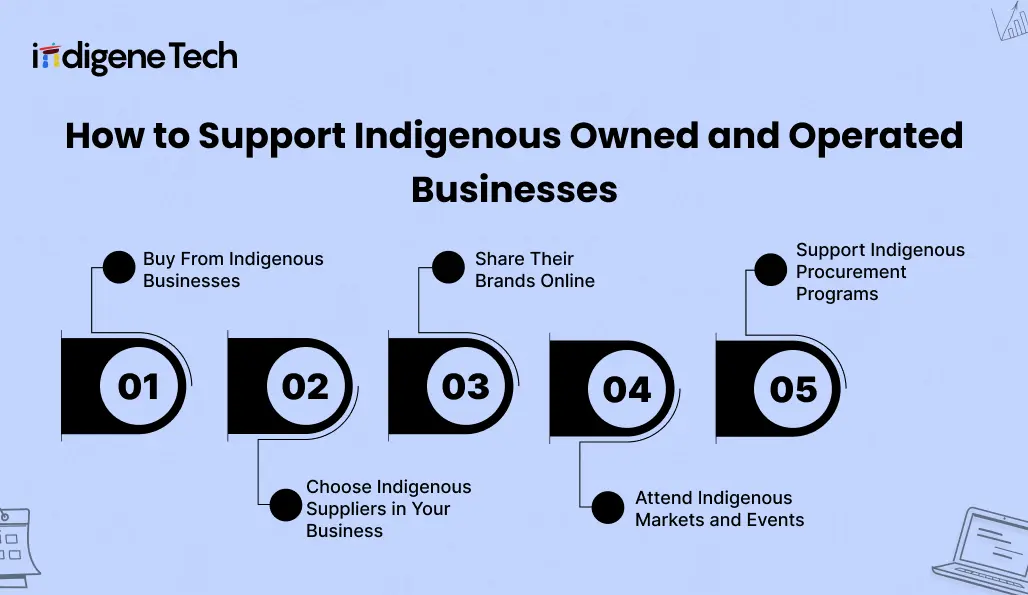
Supporting Indigenous owned and operated businesses helps strengthen local economies, protect cultural identity, and create long-term community opportunities. Whether you are an individual customer or a business decision-maker, your support makes a real difference. Simple actions like buying, sharing, partnering, and choosing Native-owned suppliers can drive meaningful impact and sustainable growth for community-led businesses.
- Buy From Indigenous Businesses: Buy Indigenous products, use their services, and subscribe to memberships. Even small purchases create meaningful community impact.
- Choose Indigenous Suppliers in Your Business: Include indigenous owned and operated businesses in your vendor list for marketing, consulting, tech, catering, or construction services.
- Share Their Brands Online: Promote Indigenous businesses by sharing posts, writing reviews, recommending to others, and tagging them on social media.
- Attend Indigenous Markets and Events: Visit Indigenous trade shows, community markets, cultural events, and expos to discover, support, and connect with businesses.
- Support Indigenous Procurement Programs: Encourage fair procurement policies that prioritize indigenous owned businesses, helping them access contracts, revenue, and stable growth.
How to Find Verified Indigenous Owned Businesses
Finding verified Indigenous owned businesses is important to ensure your support reaches the right communities. Trusted sources help confirm authenticity and avoid false claims. You can find genuine Native-owned businesses through official directories, chambers of commerce, community recommendations, and certification programs. These options provide reliable listings and help connect buyers, partners, and organizations with verified community-led suppliers.
- Indigenous Business Directories: Use official Indigenous business directories to find certified businesses listed by region, industry, and verified ownership categories.
- Indigenous Chambers of Commerce: Indigenous chambers provide business listings, networking events, and credibility verification to connect buyers with trusted Indigenous suppliers.
- Community Recommendations: Local community networks often recommend trusted Indigenous businesses, making referrals one of the most reliable verification methods.
- Certification Programs: Certified programs verify Indigenous suppliers for procurement, helping governments and businesses choose genuine indigenous owned and operated businesses.
How Indigenous Entrepreneurs Can Grow Their Businesses in 2026
In 2026, Indigenous entrepreneurs can grow faster by combining cultural values with smart business strategies. Strong online visibility, easy digital ordering, partnerships, storytelling, and access to funding help create stable growth. These steps support sustainable success while keeping the business connected to community impact. With the right tools and support, indigenous owned businesses can expand confidently.
- Build a Strong Online Presence: Create a clear website showing who you are, your services, your uniqueness, and your contact options to build trust online.
- Offer Digital Payment + Easy Ordering: Enable online booking, eCommerce, QR payments, and quick customer support to make buying faster and easier.
- Partner With Other Indigenous Businesses: Collaborate with Indigenous businesses through joint marketing, bundle offers, shared events, and cross-referrals to grow faster.
- Focus on Storytelling Branding: Share mission, culture, community impact, and real stories to connect emotionally and build loyalty for long-term growth.
- Use Government & Community Funding Programs: Apply for Indigenous grants and funding for startups, training, women-led programs, innovation, and youth entrepreneurship support.
Indigenous Business Trends in 2026
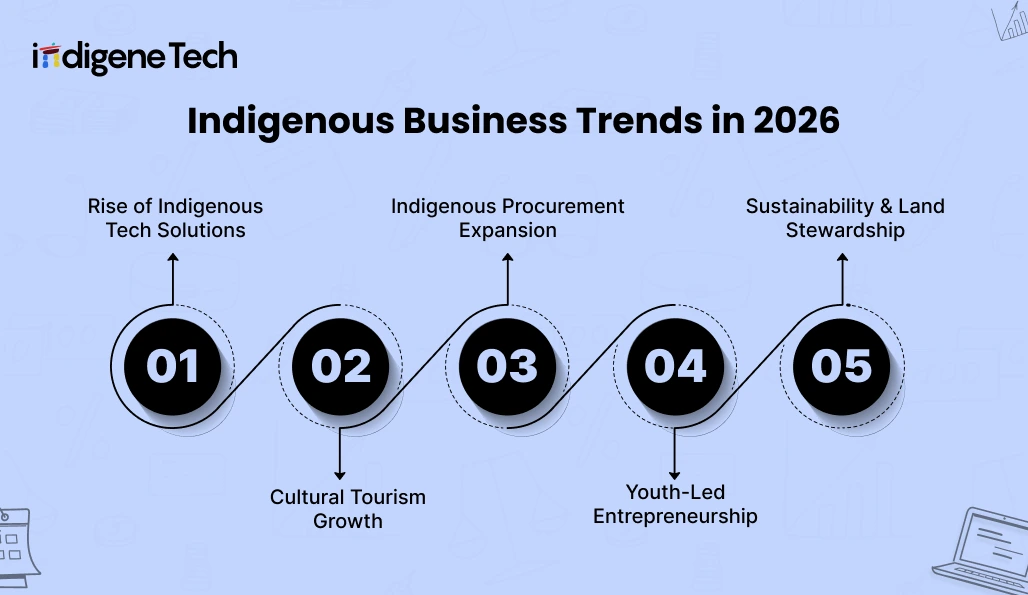
In the year 2026, Indigenous businesses are influenced by digital growth, cultural demand, and sustainable practices. There is a rapid expansion of technology solutions, cultural tourism, and procurement opportunities. Moreover, youth-led entrepreneurship is flourishing, resulting in the introduction of new ideas as well as online-first brands. On the other hand, sustainability and land management are regarded as primary virtues of the indigenous-owned and operated businesses, thereby drawing the global environmentally friendly consumers’ attention.
- Rise of Indigenous Tech Solutions: In the area of tech solutions, Indigenous-led companies are now modern business needs’ app development, AI tools, cloud services, and cybersecurity.
- Cultural Tourism Growth: People travelling to get more authentic cultural experiences have pushed the support of Indigenous operators, community programs, and heritage-based travel services forward.
- Indigenous Procurement Expansion: The rise in the number of procurement policies that favor the native-owned businesses is such that the Indigenous companies will eventually gain access to government contracts and enterprise partnerships all over the world.
- Youth-Led Entrepreneurship: Youthful entrepreneurs are those who re-establish companies under a brand-first, online-first, and social impact startup, thereby becoming the source of innovation and modern marketing strategy.
- Sustainability & Land Stewardship: In the year 2026, eco-friendly Indian business will prove that through the use of low-impact operations and traditional knowledge, they have turned sustainability into a solid business advantage.
The Future of Indigenous Owned and Operated Businesses
The future of Indigenous owned and operated businesses is very bright after 2026. Native entrepreneurship is going to get even more support and be seen as a key driver of community-led growth. Supportive customers, government buying power for First Nations communities, and youth skills and business training across many communities are major factors contributing to this progress.
These businesses are going to make an impact not only through bigger size but also through their overall influence in society. They will play a stronger role in job creation, innovation, cultural preservation, and sustainable development. Community-led brands will continue to succeed in the long run without losing cultural identity and accountability as they gain access to digital tools and wider markets.
- More Indigenous-Owned Digital Platforms: As a result, there will be a rise in the number of Indigenous entrepreneurs who will open their own online stores, apps, and service platforms. This will allow businesses to sell outside their local areas, to connect with customers directly, and to grow faster.
- Stronger Supply Chains Between Communities: Over time, Indigenous communities will help each other more through a common supply chain of local sourcing, production, and distribution. This will not only strengthen local economies but also keep profits within the Indigenous networks.
- International Recognition of Indigenous Brands: The world will discover and recognize Indigenous products and experiences in cultural tourism, arts, fashion, food, and natural wellness products. The main factors behind this will be the use of compelling narratives and branding that will enable the businesses to connect with international buyers and partners.
- Increased Investment and Funding Support: Funding support is expected to increase through grants, community programs, corporate partnerships, and impact investment. This will help indigenous owned and operated businesses expand operations, hire teams, and build stronger systems.
- Community-Led Innovation and Entrepreneurship Education: More business training programs, youth mentorship, and Indigenous-led incubators will support the next generation of entrepreneurs. This will create a strong cycle of growth where experienced founders guide new businesses.
Also, read: Why Indigenous Owned and Operated Tech Businesses Are Essential for Sustainable Development in Canada?
Conclusion
Indigenous owned businesses are not mere businesses. They are the strongest voices for the culture, and they fight for the rights of the community and for the self-sustaining economy. The year 2026 is nearly upon us, and the situation is pretty much the same. The rising count of businesses that are owned and run by Native communities is the evidence that First Nations entrepreneurs are connecting the past with the present, and that is through the modern solutions they provide while preserving the tradition, community values, and accountability as the foundations. It does not matter in what capacity you are related to the business, be it as a customer, business partner, investor, or a policymaker, supporting community-owned businesses is equal to supporting long-term growth, equity, and community-led development.
We at IndigeneTech are very proud to be a part of this movement. We are doing it by providing digital solutions that are trustworthy and helping Native entrepreneurs and organizations to grow. The technology we build encompasses a wide range from websites and mobile applications to custom software and cloud services. The main aim of our technological advancements is to make the communities strong, serve the people better, and also create avenues for the eco-friendly growth that is sustainable.
FAQ
1. What are Indigenous owned businesses?
Indigenous owned businesses are companies whose main owners are Indigenous individuals or groups. They can vary in size and are active in multiple sectors. By employing people, these businesses, besides, granting Economic boost to the area where they are situated, are usually culture-based, community-oriented, and maintain sustainability over the period.
2. What is the difference between Indigenous owned and operated businesses?
Indigenous owned and operated businesses not only belong to the Indigenous people but also take care of them in terms of management and running. This leads to a situation where the community is involved in all aspects of the business, from decision-making to leadership and daily operations, thereby giving rise to a very strong connection with the culture, authenticity, and community-based growth.
3. Why should people support Indigenous businesses in 2026?
Indigenous enterprises will not only give a push to the local economy but also create job openings and cultural identity protection through the whole process, thus making a positive impact. By the year 2026, these businesses will still be the ones exhibiting the most ethical and green practices. Indeed, by supporting them, you will not only be promoting self-determination but also investing in education, healthcare, youth, and local community programs.
4. How to find a verified Indigenous-owned business?
It is very simple to find the verified Indigenous-owned businesses by referring to the official directories, chambers of commerce, and certification programs for the Indigenous business. Besides, community referrals are also reliable. All these sources not only confirm the authenticity but also ensure that your buying or partnership is with a legitimate Indigenous-owned business.
5. In what ways can IndigeneTech make Indigenous businesses more prosperous?
IndigeneTech is a software development and technology solutions provider that specializes in indigenous business growth. To a certain extent, we provide digital visibility, better customer experience, and facilitate operations. More specifically, our aim is to align Indigenous businesses with technology that ensures their growth remains sustainable in the long run.