
Consumers today make purchasing decisions with greater purpose than before. Customers seek products and services, but they prefer to buy from companies that share their core beliefs while helping their communities through worthwhile initiatives. The public now gives increasing attention to businesses that indigenous people control and operate.
Indigenous businesses create economic sustainability by combining traditional practices with handcrafted products, organic goods, and modern digital services that support new ventures. Supporting these businesses allows customers to shop ethically while promoting economic growth, preserving cultural heritage, and encouraging innovation.
People who run indigenous businesses create more than physical goods to sell. In 2026 indigenous brands will enter the digital market through their launch of online stores, software-as-a-service products and mobile app development services. The new business model enables communities to grow their operations worldwide while maintaining their local connections.
This blog investigates indigenous-owned businesses, their importance, the obstacles they encounter, methods for their support, and the impact of mobile application development on indigenous business development in contemporary society.
TL;DR
- Indigenous businesses combine culture, community values, and modern entrepreneurship.
- Supporting them strengthens local economies and preserves cultural heritage.
- Mobile apps help indigenous brands sell globally without middlemen.
- Digital tools improve storytelling, trust, and long-term customer loyalty.
- Ethical support creates lasting social, cultural, and economic impact.
Key Points
- Indigenous owned businesses blend traditional knowledge with modern business models, creating sustainable growth while protecting cultural identity and heritage.
- Supporting indigenous businesses strengthens local communities, creates jobs, preserves traditions, and promotes fair economic participation in global markets.
- Mobile app development enables indigenous brands to sell directly, share authentic stories, and build customer trust without relying on expensive marketplaces.
- Digital platforms help indigenous entrepreneurs scale globally, reach new audiences, and maintain full control over branding, pricing, and cultural representation.
- Choosing indigenous owned brands supports ethical consumerism, sustainability, and long-term community development that benefits future generations.
What Are Indigenous Owned Businesses?
Indigenous owned businesses are enterprises that are owned, controlled, and operated by Indigenous peoples. This includes Native communities, First Nations, Aboriginal peoples, Māori, and other Indigenous groups across different regions of the world.
These businesses operate as small family-owned businesses, developing startups and large businesses. Their ownership structure does not define them because they share a stronger bond with their mission.
- Cultural heritage
- Community development
- Sustainable practices
- Ethical business values
- Preservation of traditional knowledge
Unlike many mainstream corporations, indigenous owned brands often focus on long-term community growth rather than short-term profit.
Why Indigenous Businesses Matter in 2026
Indigenous entrepreneurship has developed into an extensive economic movement which unites economic development with cultural heritage since its inception as a local market business. Indigenous businesses will achieve international recognition in 2026 because their operations produce goods and services that enhance community development while protecting cultural heritage and promoting sustainable growth. The importance of these organizations has reached its highest point throughout their history.
1. Economic Empowerment for Indigenous Communities
For decades, many indigenous communities have faced barriers like limited access to funding, fewer job opportunities, and reduced representation in mainstream industries. The support of indigenous owned businesses establishes actual economic transformation through its three primary effects.
- Creating stable local jobs
- Increasing household and community income
- Supporting long-term financial independence
- Reducing poverty and economic dependency
Indigenous entrepreneurship builds stronger local economies where profits often return directly to the community instead of only benefiting large corporations.
2. Cultural Preservation Through Business
The Indigenous people of this region understand their cultural heritage through their everyday activities rather than through historical records. The Indigenous businesses of this area use their business operations to safeguard and advance their traditional cultural heritage.
- Indigenous languages and native expressions
- Traditional artwork, symbols, and design patterns
- Handmade and heritage-based production methods
- Storytelling rooted in indigenous history
- Community traditions and values
When people support indigenous businesses, they are also helping keep cultural identity alive and ensuring traditions are passed on to future generations.
3. Sustainable and Ethical Business Practices
Indigenous owned brands have achieved global recognition because their sustainable business operations maintain strong connections to natural ecosystems. Indigenous communities have maintained environmental equilibrium through their traditional practices, which most indigenous enterprises adopt in their operations.
- Natural and locally sourced materials
- Eco-friendly and recyclable packaging
- Ethical sourcing and fair trade practices
- Low-waste or zero-waste production models
- Community-based supply systems
This makes indigenous businesses especially valuable in 2026, when consumers are increasingly choosing brands that support sustainability and ethical production.
4. Representation and Visibility
The expansion of indigenous owned businesses brings both financial success and the establishment of indigenous representation. Their success establishes indigenous entrepreneurship as a legitimate component of mainstream markets through their ability to raise public understanding and dismantle existing stereotypes. The growth provides advantages which include:
- Giving Indigenous entrepreneurs a stronger voice
- Increasing cultural pride and community confidence
- Creating inclusive opportunities in business and employment
- Encouraging more Indigenous youth to start businesses
Greater visibility ensures Indigenous communities are not only included in modern economies but are also recognized as leaders in innovation, sustainability, and cultural value.
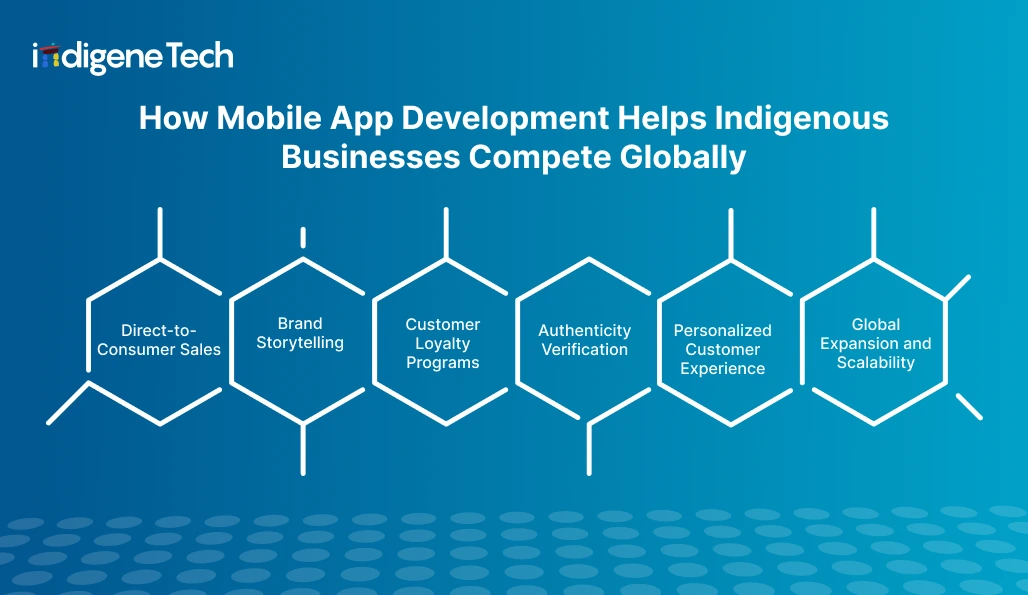
How Mobile App Development Helps Indigenous Businesses Compete Globally
The small size of indigenous businesses does not limit their ability to create significant effects. They maintain cultural traditions while helping local economies through their development of products and services, which reflect their cultural identity. The presence of major platforms which impose high costs and restrict marketplace accessibility creates challenges for businesses when they attempt to compete against international brands in worldwide markets.
Mobile app development creates important benefits for businesses. Indigenous-owned companies can reach customers worldwide through a mobile app that they developed. The platform enables them to sell their products directly to customers while sharing their unique stories and establishing relationships with customers, which result in loyalty without needing to rely on major online platforms that take fees and restrict their ability to manage their business operations.
The following section provides a thorough explanation of how mobile applications assist indigenous enterprises in their efforts to achieve global market presence.
1. Direct-to-Consumer Sales
Mobile applications enable indigenous businesses to reach their customers directly without needing to depend on major e-commerce platforms for their sales. The direct selling method enables businesses to achieve higher profit margins while building stronger customer relationships and gaining complete control over their operational processes.
With direct-to-consumer selling, indigenous businesses can:
- Avoid paying high commission fees charged by marketplaces
- Control product pricing and discounts without restrictions
- Own customer data and purchasing behavior insights
- Improve communication through order updates and customer support
- Provide a smoother buying experience, from browsing to checkout
The system enables companies to achieve autonomous operations while maintaining their revenue growth. The system guarantees that customers will provide their financial support to the indigenous business organization, which will result in reduced profit distribution to non-native business platforms.
2. Brand Storytelling
Indigenous brands use their product sales to share their cultural heritage and identity through their offerings. A mobile app allows users to create engaging authentic stories which exceed the content limitations of marketplace listings that display product images and brief descriptions.
Apps support content like
- Videos showing craftsmanship, traditions, and creation processes
- Blogs explaining cultural meaning behind designs or ingredients
- Digital product catalogs with detailed storytelling
- Behind-the-scenes content that highlights community involvement
- Founder stories that create emotional connection and trust
3. Customer Loyalty Programs
Business growth remains constant because loyal customers maintain their purchases. Mobile apps enable indigenous businesses to develop retention programs which reward their repeat customers while establishing long-term customer relationships.
Loyalty features can include:
- Reward points for every purchase
- Discount codes for returning customers
- Membership programs with exclusive benefits
- Early access to new product collections
- Special offers on cultural festivals and events
The programs motivate customers to return for future business while increasing their spending because they help create dedicated brand supporters. Indigenous businesses can establish community loyalty and create steady revenue streams through their apps instead of needing to pursue new customers continuously.
4. Authenticity Verification
Indigenous businesses face their biggest obstacle when customers purchase counterfeit indigenous products and non-indigenous products that falsely claim indigenous ownership. The situation results in both sales loss and cultural credibility destruction and customer trust erosion.
Mobile apps can solve this through verification systems such as
- Verified business identity badges
- Certificates of authenticity for cultural products
- QR code scanning for product verification
- Creator details and origin information
- Real-time confirmation that the brand is indigenous owned
This protects cultural heritage by reducing imitation and ensuring customers confidently purchase from real indigenous businesses. It also strengthens market trust by proving authenticity in a clear and reliable way
5. Personalized Customer Experience
Large brands achieve worldwide success through their capacity to create customized shopping experiences which their mobile applications enable indigenous businesses to replicate. The apps gather customer interaction information while safeguarding their privacy which enables businesses to create personalized experiences that boost customer engagement and sales conversion rates.
Personalization can include:
- Product recommendations based on browsing or purchase history
- Push notifications for restocks, limited drops, or promotions
- Custom offers based on customer interest
- Language preferences to improve accessibility
- Wishlist, cart reminders, and quick reorders
The features of the product maintain customer engagement which leads to higher customer retention rates. Indigenous businesses obtain a competitive advantage because the customer experience provides modern, convenient, and interactive features that match major brand standards.
6. Global Expansion and Scalability
The mobile application enables users to access its services from any location. Indigenous businesses in remote areas can attract customers from across the globe through their digital platform. The system enables them to expand their business operations with virtual stores instead of establishing physical retail outlets.
Global scalability benefits include:
- International reach through app stores and global marketing
- Multi-currency payment support for global sales
- Easy order tracking and logistics integration
- Better inventory management with automation tools
- Ability to add new products and features as the business grows
Mobile apps create a stronger foundation for long-term growth. Indigenous businesses can expand production, reach new audiences, and build international recognition while staying rooted in cultural authenticity.
The Role of Mobile App Development in Indigenous Business Growth
The indigenous businesses of 2026 use mobile app development to expand their operations beyond their home territories. Through mobile applications, businesses can sell their products directly to customers, which helps them reach international markets and protect their cultural heritage.
Why Mobile Apps Are a Game Changer
- A mobile application benefits indigenous businesses by providing them with the following advantages.
- Customers can purchase products through direct sales because indigenous businesses need mobile applications to sell their products without using intermediaries. This system enables them to enhance their customer service while making better profits.
- The system enables businesses to eliminate their need for third-party platforms. The system lets businesses operate their own online stores without needing to pay marketplace fees, which restrict their online visibility and customer connection methods.
- The company uses its customer engagement program which includes notifications, loyalty rewards, product updates, and special offers, to establish loyal customer relationships. The application enables users to access educational content through videos, blogs, and interactive material, which helps them learn about indigenous culture while maintaining their traditional heritage.
- Through global application access, indigenous businesses can distribute their products worldwide while reaching new markets and expanding their operations beyond their home area. The application gives businesses control over their brand identity and messaging and product display, which enables them to maintain their original brand identity while decreasing the chances of their brand being copied.
Apps help indigenous businesses create their own digital space instead of relying only on social media or websites.
Best Practices for Indigenous Business App Development
The indigenous business needs to construct its application from three essential elements, which include respect, usability, and future scalability. The mobile application needs to follow proper design principles that enable business expansion while maintaining specific cultural values and building customer confidence.
- Design elements and symbols from indigenous cultures: The sacred patterns should not be misused because authentic elements need to be used respectfully, and indigenous identity requires accurate representation through proper design elements.
- Multilingual support: The program should include local languages whenever feasible to enhance accessibility and cultural representation for indigenous users and international users who speak different languages. The design should maintain basic layout elements that enable citizens of all ages to navigate the system because it needs to be understandable for elderly users, young users, and new users.
- The application needs optimization to function effectively in areas that experience limited internet access. The system needs secure payment connections together with delivery monitoring capabilities and inventory management systems to establish dependable sales processes. The company safeguards customer data through three security measures, which include data encryption, secure authentication methods and compliance with industry standards to protect against data breaches.
Suggested Article: Why Indigenous Owned and Operated Tech Businesses Are Essential for Sustainable Development in Canada?
Common Types of Indigenous Owned Businesses
Modern Indigenous entrepreneurship is more diverse than ever. Indigenous owned businesses now operate across many industries—expanding beyond traditional crafts into fashion, wellness, tourism, and technology. What makes them unique is how they combine cultural identity, community values, and sustainable practices with modern business growth.
Here are some of the most common types of indigenous businesses:
- Handmade Crafts and Art: Indigenous artisans create paintings, beadwork, carvings, jewelry, and textiles that preserve cultural heritage and traditional storytelling.
- Fashion and Apparel: Indigenous fashion blends traditional patterns with modern clothing, building global visibility, cultural pride, and unique brand identity.
- Food and Wellness: Indigenous wellness businesses offer herbs, teas, skincare, and cuisine products using clean ingredients and traditional health knowledge.
- Tourism and Experiences: Indigenous tourism provides cultural tours, eco retreats, workshops, and storytelling experiences that support communities and educate travelers respectfully.
- Tech and Digital Services: Indigenous entrepreneurs build e-commerce stores, branding services, media content, startups, and mobile app development for global growth.
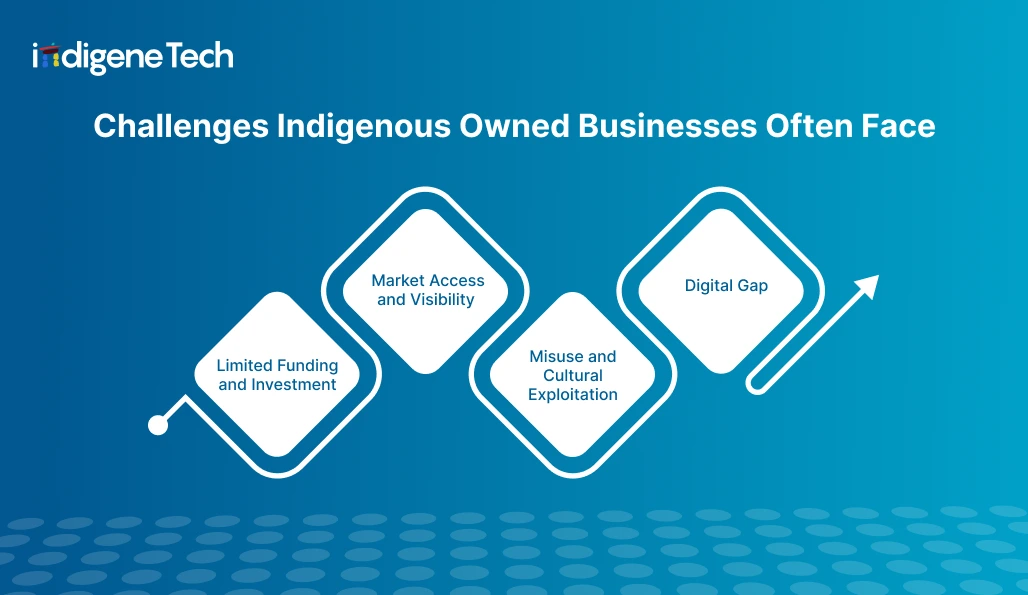
Challenges Indigenous Owned Businesses Often Face
Indigenous owned businesses experience rapid growth, yet they encounter specific obstacles that create difficulties in competing against mainstream brands. The existing barriers stem from two main factors, which include limited resources and restricted access to opportunities and cultural exploitation. The importance of understanding these challenges stems from their demonstration of why indigenous business support needs to be prioritized.
1. Limited Funding and Investment
One of the biggest challenges for indigenous entrepreneurs is access to money and financial support. Many Indigenous founders have difficulty securing the capital needed to start or scale a business, such as:
- Startup funding for launching operations
- Business loans from banks and institutions
- Government or private grants
- Venture capital investment for growth
Without strong financial backing, even successful indigenous owned businesses may struggle to expand production, hire staff, or market their products properly—even when customer demand is high.
2. Market Access and Visibility
Many indigenous owned businesses are based in rural or remote regions. While their products may be high-quality and culturally valuable, reaching mainstream markets can be difficult. Growth often requires:
- Strong marketing resources to attract customers
- Access to digital tools like websites and online stores
- Reliable logistics and shipping infrastructure
Without these, many indigenous businesses remain unseen outside their local community, limiting sales and long-term business growth.
3. Misuse and Cultural Exploitation
Another serious issue is the misuse of Indigenous identity and culture. Many non-indigenous sellers copy indigenous designs or sell products while falsely claiming they are indigenous owned. This creates major harm because it:
- Steals cultural designs and traditional art styles
- Misleads customers looking for authentic indigenous brands
- Reduces trust in the overall market
- Directly impacts sales of real indigenous owned businesses
This is why it’s essential to support verified indigenous businesses and choose authentic sellers who represent real Indigenous communities.
4. Digital Gap
Technology is a major growth tool in 2026, but many indigenous businesses still face difficulties adopting digital systems. Common issues include:
- Limited knowledge of e-commerce and online selling
- Outdated or poorly designed websites
- Limited access to modern development tools
- Weak internet connectivity in rural regions
This digital gap can prevent businesses from scaling, reaching global customers, and competing with digitally strong brands. This is also where modern solutions like mobile app development can make a major difference by helping indigenous businesses sell online, connect with customers, and grow beyond geographic limits.
How Supporting Indigenous Owned Businesses Creates Real Impact
When you buy from indigenous owned businesses, you’re not only purchasing a product or service, you’re supporting a bigger mission. Indigenous brands achieve success through community-first values, which enable them to use shared resources that support their business operations and community development efforts. Your support contributes directly to long-term development and cultural preservation.
Your support helps:
- Provide financial support to educational and community initiatives that help to open up paths for the next generations
- Generate local employments and consolidate job opportunities inside native communities
- Develop stronger native economies through self-reliant expansion of businesses
- Safeguard heritage crafts, traditional skills, and native languages
- Enable native entrepreneurs to grow, come up with new ideas and take the lead
- Promote production practices that are fair to the environment and that make good use of nature, thus being sustainable, through a deep respect for nature
In many cases, indigenous businesses reinvest their earnings back into the community, so every purchase creates a ripple effect of positive impact.
Top App Ideas for Indigenous Owned Businesses
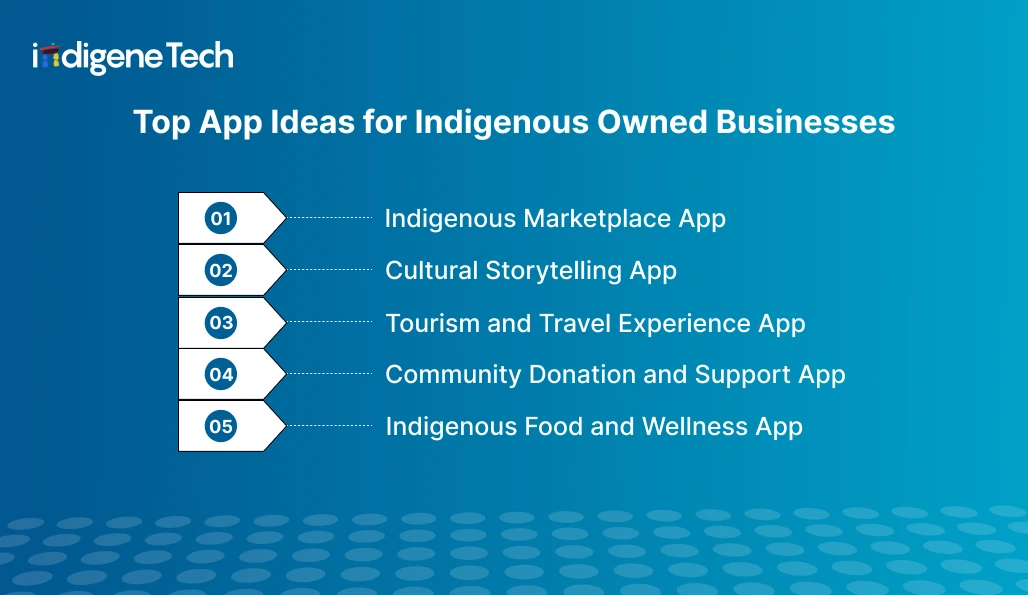
Here are mobile app development concepts that work exceptionally well for indigenous brands:
1. Indigenous Marketplace App
An app where multiple indigenous businesses can sell products in one place with verified ownership, ensuring buyers trust authenticity.
Key Features:
- Product catalog
- Multi-vendor store
- Secure payments
- Verified seller badges
- Shipping tracking
2. Cultural Storytelling App
This type of app promotes heritage by sharing:
- Indigenous stories
- Legends
- Languages
- Audio experiences
- Educational content
This not only monetizes culture ethically—it also preserves it digitally.
3. Tourism and Travel Experience App
Indigenous tourism can use mobile apps for:
- Booking tours
- Cultural itinerary planning
- Location guides
- Event schedules
4. Community Donation and Support App
Many indigenous businesses also run social programs. An app can help manage:
- Donations
- Fundraising campaigns
- Volunteer programs
- Community updates
5. Indigenous Food and Wellness App
A mobile wellness app can include:
- Traditional medicine resources
- Wellness routines
- Indigenous recipes
- E-commerce for natural products
Also, read: A Complete Guide to Indigenous Owned and Operated Businesses in 2026
Final Thoughts
Indigenous owned businesses extend beyond their commercial aspect. The businesses represent historical heritage and demonstrate enduring strength, innovative ability, and their ability to unite their community. Your support through purchases, social media sharing and professional services helps create actual results.
Indigenous entrepreneurship first entered the digital economy through mobile app development which became its key growth driver when 2026 started. Indigenous businesses use mobile applications to achieve international growth while maintaining their cultural identity and establishing permanent customer relationships.
You should choose indigenous-owned brands during your next shopping, subscription, travel or investment activity. Your purchase of valuable items extends beyond that because it creates a future in which indigenous communities will prosper, develop and take leadership positions.
FAQs
1. What are indigenous owned businesses?
Indigenous owned businesses are companies that are owned and managed by Indigenous people, including Native communities, First Nations, Aboriginal peoples, and other Indigenous groups worldwide. These businesses use their profits to support their communities while building sustainable economic independence rooted in cultural heritage and community traditions.
2. Why should I support indigenous businesses instead of large brands?
The distribution of indigenous business profits enables native entrepreneurs and their communities to achieve economic balance between indigenous people and non-indigenous people. The businesses operate by applying ethical methods that protect their cultural heritage while developing their local communities. Your purchase creates employment opportunities which help local economies while safeguarding indigenous cultural heritage from misrepresentation and exploitation.
3. How can I check if a business is truly indigenous owned?
The company website needs to be checked for ownership details, founder information, and cultural background to verify authenticity. The business should provide indigenous-led branding together with verified directories, available certifications and community partnerships. The business should avoid selling indigenous designs that lack clear identity claims. Official sites and trusted marketplaces offer safer buying options, which decrease counterfeit dangers.
4. How does mobile application development contribute to the expansion of indigenous businesses through their indigenous-owned businesses?
Mobile app development helps indigenous businesses reach customers worldwide while enabling direct sales and establishing customer trust. The applications enable cultural storytelling through their content, which creates stronger emotional connections with users. The applications enable users to maintain brand authenticity through brand management tools and to receive notification messages, promotional content and customized experiences.
5. What are the best ways to support indigenous owned businesses online?
You can support indigenous owned businesses online by purchasing directly from their websites, sharing their posts on social platforms, leaving honest reviews, and recommending them to others. The selection of verified sellers should replace the selection of fake indigenous products. The organization will achieve sustainable growth through digital marketing support which includes website development and mobile application creation.