

The future of innovation is to develop beyond global technical leaders and traditional high-tech solutions. Fast, indigenous technology solutions become important factors for progress. These solutions utilize the requirements to create local knowledge, cultural insights and societal-specific durable, inclusive and practical technologies. By combining traditional knowledge with modern equipment, indigenous innovations not only address local challenges but also form the future of global technical trends, making the future of innovation more human-centered, justified and environmentally conscious.
What Are Indigenous Technology Solutions?
Indigenous technology solutions refer to equipment, systems or procedures developed by local communities to meet their unique needs. Unlike mainstream technologies that prefer scalability and profit, these focus on cultural relevance, environmental stability and community power.
Key Features:
- Locally relevant and context-specific: Indigenous technology solutions consider the unique requirements for local communities based on their regional environmental conditions, cultural practices and social structures to create the solutions that can be the most effective.
- Integrates traditional knowledge with modern science: These solutions merge traditional knowledge, methods and practices with modern scientific approaches and solutions and create innovation that reflects both human knowledge and technologies based on social traditions.
- Environmentally sustainable and resource-efficient: The purpose of indigenous technologies aims for low environmental effects when using renewable materials, reducing waste and optimizing energy and materials to create technologies that encourage organic balance and long-lasting stability.
- Culturally sensitive and community-driven: These techniques are developed in combination with local communities and respected social norms, practices and values that emphasize community engagement, ownership and long -term lifting and relevance of positive social impact.
Examples:
- Solar-powered irrigation systems: These systems provide reliable water use outside the network for agricultural communities and use solar energy to effectively pump water by reducing the dependence on fossil fuels and supporting permanent agriculture.
- Water filtration units that use local citrus materials:Cost-effective filtration systems made of soil, sand, coal or other regional resources provide clean drinking water while easy to maintain and environmentally friendly.
- Digital platforms that retain indigenous languages and customs: mobile apps and online platform documents teach and promote local languages, history and cultural traditions and ensure that the younger generations maintain linguistic and cultural heritage in the digital age.
- Adapted agricultural equipment for regional climate: Especially local soil and equipment designed for weather patterns and crop types increase agricultural productivity by respecting ecological conditions and supporting permanent agricultural practices.
The Future of Innovation Through Indigenous Technology Solutions
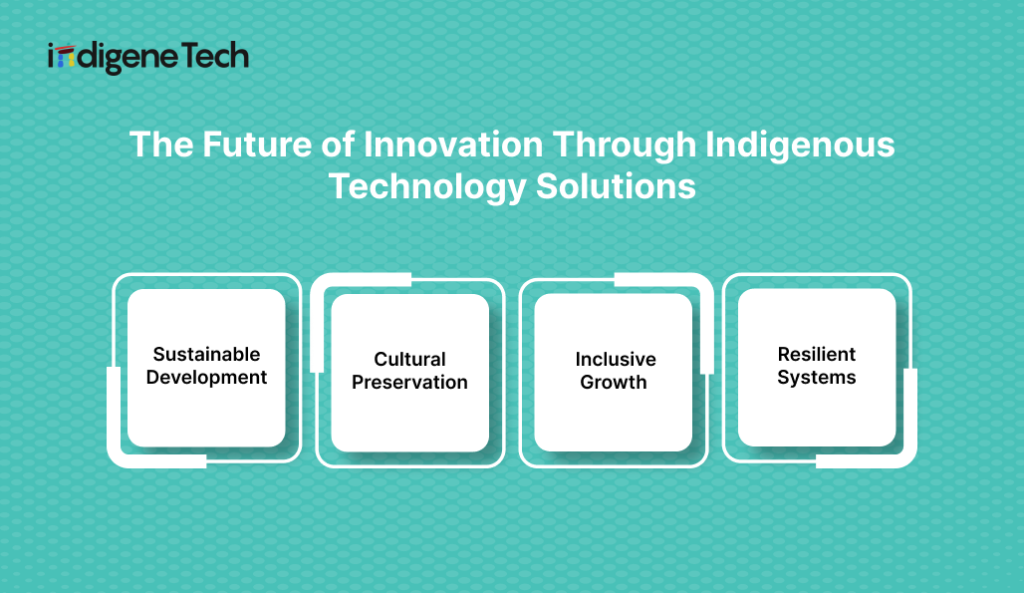
The future of innovation is not only shaped by advanced industries and global companies but also by indigenous technology solutions that prefer stability, inclusion and cultural relevance. These solutions integrate ancestral knowledge with modern science to create technologies that are both practical and advanced. From renewable energy systems in off-network communities to digital platforms that retain indigenous languages, suppress local challenges by determining global examples for responsible innovation. By focusing on sustainable development, cultural protection, inclusive development and flexible systems, indigenous technology proves that progress can be both high technology and deep people. As the world’s climate change, lack of resources and changes with cultural symmetry, these social innovations show us that the future of technology will be defined by the relevance, equity and honor of cultural heritage.
1. Sustainable Development
Indigenous technology solutions emphasize environmentally friendly practices that reduce waste, reduce carbon footprints and use natural resources responsibly. By combining traditional ecological knowledge with modern science, they install a global goal for permanent innovation that can withstand climate change and lack of resources.
2. Cultural Preservation
Technology becomes a tool for identity protection. Indigenous technology solutions protect the stories digitally, create language education platforms and protect the rituals by protecting endangered languages, traditional crafts and cultural knowledge, and they ensure that the cultural heritage is strengthened instead of changing innovation.
3. Inclusive Growth
Local innovation allows communities to actively participate in economic development. By creating jobs, promoting entrepreneurship and maintaining profits at the local level, indigenous technology solutions produce more fair economies that favor people and communities of external gain-driven companies.
4. Resilient Systems
Because they are designed for the local references, indigenous technology solutions are highly adaptable, low costs and reliable. These properties make them important in crisis times whether to respond to natural disasters, epidemic or unexpected climate challenges.
Example – Rainwater Harvesting with IoT Sensors
A strong representation of the future is found in modern rainwater harvesting systems. With a combination of centuries-old water collection practices with IoT-based sensors, society can adapt, save resources in dried vulnerable areas, and ensure long-term water security.
Real-World Examples of Indigenous Technology Solutions
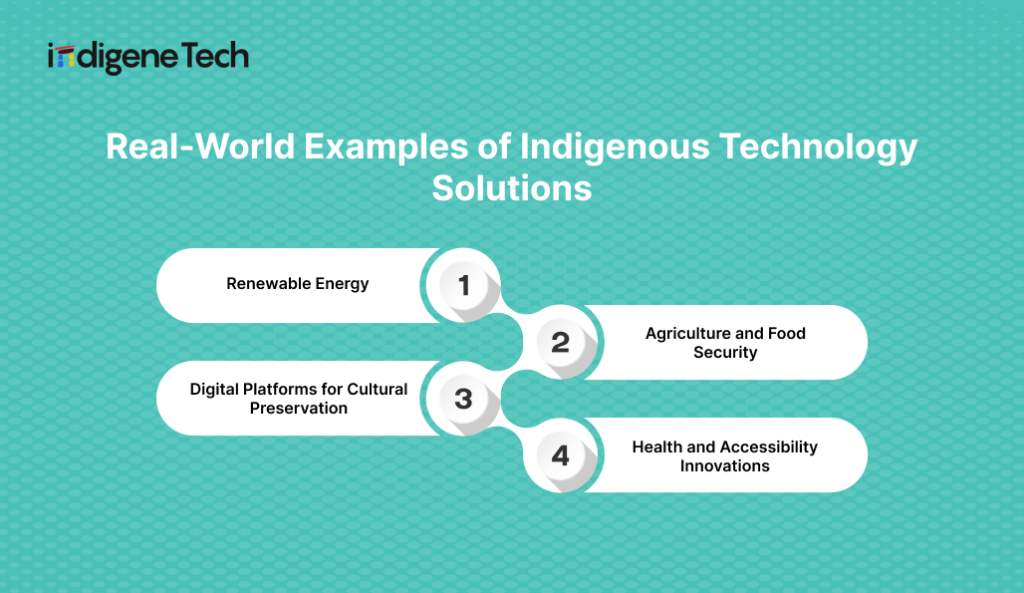
1. Renewable Energy
- Africa: Solar mini-grids designed by local engineers provide electricity to remote communities sustainably.
- Asia: Small-scale wind turbines co-developed with local knowledge optimize energy production.
2. Agriculture and Food Security
- South America & India: Seed storage, pest control, and irrigation methods integrate ancestral knowledge with modern technology to increase yields and reduce environmental impact.
3. Digital Platforms for Cultural Preservation
- Canada & Australia: Mobile apps and digital platforms are being used to teach indigenous languages and document cultural practices, preserving them for future generations.
4. Health and Accessibility Innovations
- Africa & Southeast Asia: Local health-monitoring devices and mobile health apps combine traditional medicinal knowledge with technology to provide cost-effective, scalable solutions.
How Indigenous Technology Solutions Are Influencing Global Innovation
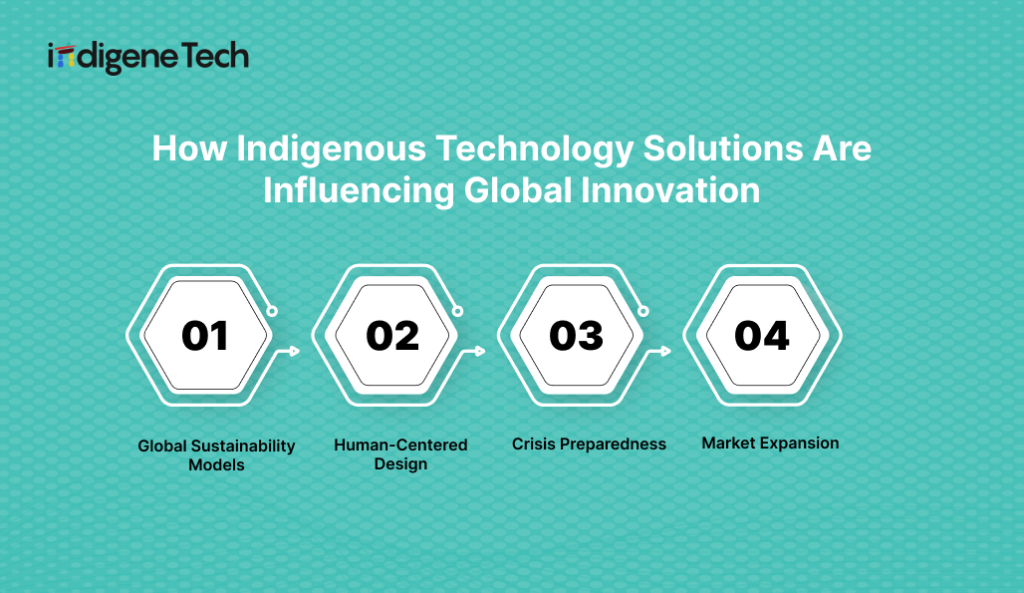
- Global Sustainability Models: Indigenous technology solutions provide environmentally friendly, resource-developed innovation that induces permanent global practice. By combining tradition with modern science, these models prove that development can be environmentally conscious in a world that is very practical and impressive.
- Human-Centered Design: Priority to more people and communities from profits, redefines innovation with indigenous dissolution sympathy, inclusion and relevance. They ensure that technologies serve real human needs and install a high global goal for moral, socially centered and socially responsible design practice.
- Crisis Preparedness: Cheap and adaptable, indigenous technologies increase global flexibility during natural disasters and epidemics. By taking advantage of local innovation, they provide scalable, effective solutions that improve emergency reactions and long-term preparations in different regions and weaker populations.
- Market Expansion: The partnership between indigenous peoples innovators and global companies increases economic opportunities by respecting cultural heritage. These collaborations open new markets, create inclusive growth and show how respect for traditions can coexist with advanced global trade expansion.
In essence, indigenous technology solutions are not just supporting local communities—they are shaping the future of innovation globally.
Conclusion
The future of innovation will be defined by stability, inclusion, cultural awareness and indigenous technology solutions at the center of this change. By combining traditional knowledge with modern science, these solutions address challenges that suppress challenges while they are scalable and impressive. From renewable energy and climate-smart agriculture to digital cultural protection equipment, they show how technology can respect inheritance during progress. Support and investment in indigenous web development innovations not only promote environmental responsibility but also strengthen communities and strengthen social equity. Finally, these solutions pave the way for a future that is durable, inclusive and culturally rich.