
In today’s associated world, indigenous contractors have more opportunities than ever to share their ideas, culture and innovations with people around the world. Thanks to digital technology, indigenous-owned businesses can reach international markets through online platforms, history and global participation.
For generations, indigenous communities have shown creativity, flexibility and durable living methods that are very high today. The world is ready to learn from indigenous leadership, from indigenous technologies to creative business models based on environmental care, the world is ready to learn from indigenous leadership.
This blog will help indigenous businesses to know how to promote their businesses globally, build recognition, create partnerships and get indigenous people business development while preserving the right for their culture and heritage.
The Global Opportunity for Indigenous Business Growth
Indigenous development is growing rapidly worldwide. Governments, organizations and consumers are now looking for companies that are durable, authentic and socially responsible. Indigenous peoples’ businesses fully fit this growing demand, offering products and services produced in honor of countries, people and culture.
According to the World Swadeshi Trade Forum, indigenous peoples in countries such as Australia, Canada and New Zealand contribute to their national economies each year. However, many of these businesses still have a lack of global risk, not because of limited skills, but due to limited access to international markets and resources.
Going global is more than making more money; It is about sharing stories about indigenous peoples, preserving traditional knowledge and motivating future generations to become entrepreneurs.
Understanding the Role of Indigenous Technologies
Indigenous technologies are innovations and are systems created by traditional knowledge that is sent through generations. They show deep respect for the environment and societal cooperation. Today, these technologies help the world go from natural resource management to renewable energy towards more durable and moral practices.
| Type of Indigenous Technology | Description | Global Relevance |
| Traditional Ecological Knowledge | Sustainable land, water, and wildlife management | Helps with climate change solutions |
| Indigenous Architecture | Natural materials and energy-efficient design | Inspires green and sustainable construction |
| Healing & Medicinal Practices | Herbal and natural health remedies | Supports modern healthcare and wellness |
| Digital Storytelling Platforms | Preserving culture through media and technology | Promotes global cultural understanding |
| Renewable Energy Projects | Community solar and wind initiatives | Leads the way in clean and ethical energy |
By promoting Indigenous technologies, businesses can show how traditional wisdom offers solutions for modern global challenges.
Why Going Global Matters for Indigenous Entrepreneurs
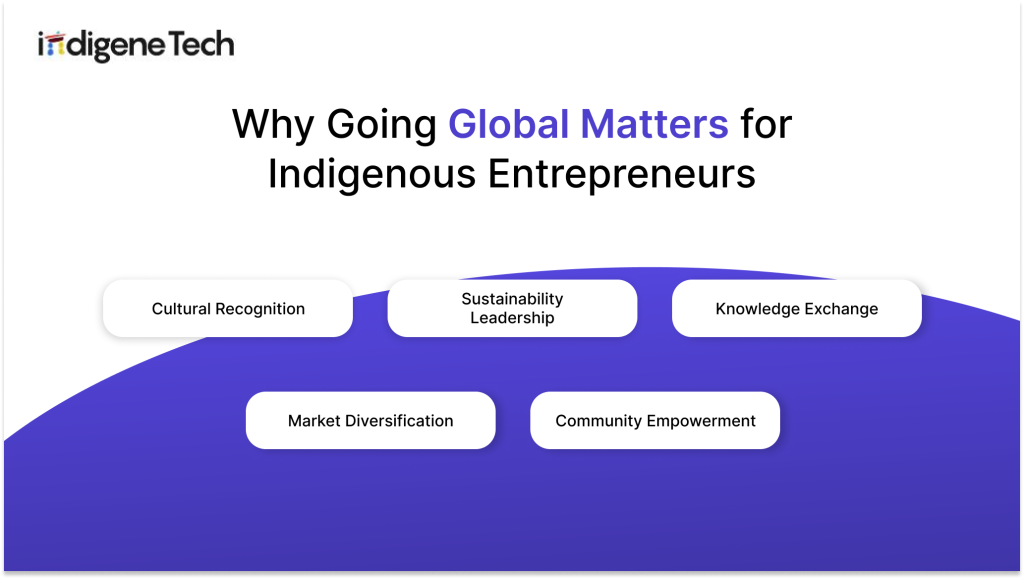
Taking the indigenous international opens the possibility of the opportunity not only for your business but also for the entire community. By stepping on the global stage, indigenous contractors can share their unique heritage, create permanent partnerships and drive meaningful social and economic changes.
Cultural Recognition:
Internationally expanding indigenous peoples provide a platform to share authentic stories that reflect their heritage, values and traditions. This is an opportunity to show the world that indigenous people’s knowledge systems are not the remnants of the past but inspire living and develop forces that inspire innovation and creativity. Through cultural history, branding and crafts, indigenous contractors have preserved their identity by creating a global impact.
Sustainability Leadership:
Several Indigenous enterprises are shaped by values of environmental stewardship and holistic lifestyles, which are heavily sought by the global market today. As Indigenous entrepreneurs demonstrate the benefits of eco-friendly practice, traditional resource management, and sustainable practices, they illustrate how to engage in business development and care for the environment simultaneously. As Indigenous leaders in sustainability, they are providing the world with a global model of sustainability
Knowledge Exchange:
International performance promotes strong cooperation. By joining companies, investors and creators all over the world, indigenous peoples’ companies can share ancestors’ knowledge by learning new techniques and business strategies. This two-way knowledge exchange leads to innovation, which respects both tradition and modernity by combining old and new to shape the more inclusive global economy.
Market Diversification:
The revenue streams of taking the business International bring diversity, reduce the dependence on local markets, and open the doors to new financing and business opportunities. This means that indigenous products and services can reach new target groups, from art and fashion to agriculture and digital solutions that emphasize authenticity and goal-controlled brands.
Community Empowerment:
When indigenous enterprises thrive in the global marketplace, this is reflected in the community. Surpluses are returned back to the local tribal community, jobs are created, educational pathways are opened, and indigenous youth can see a path forward toward work in service of the next successful generation. In a position to succeed, indigenous peoples’ youth are proud of their identity and see entrepreneurship as a path for self-determination and cultural flexibility.
In summary, indigenous peoples who succeed in the global market are more than just an economic factor; It’s about representation, it’s about flexibility, and it’s about pride. It represents expanded opportunities and does not back down from being in service of protecting cultural identity; on the contrary, it demonstrates that someone is generally better off and has a more sustainable platform for global success by being authentic.
Strategies to Showcase Your Indigenous Business to the World
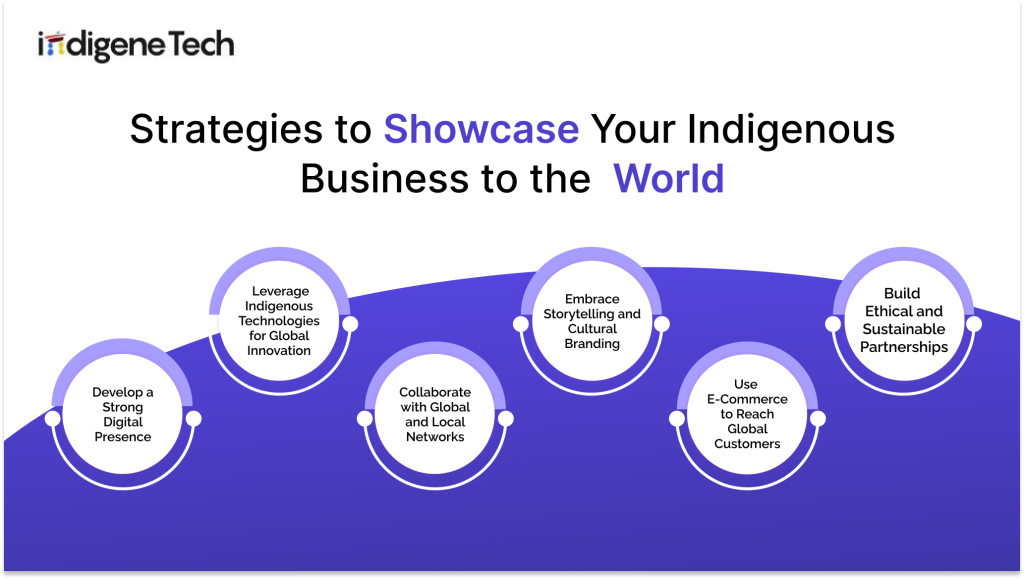
1. Develop a Strong Digital Presence
Creating a strong online presence requires you to start with a professional website, to have active social media engagement, and to create digital content that embodies your culture and/or your brand values that can assist in connecting with Indigenous people and the global community.
Tips for a strong online presence:
- Use authentic images that show your products and community.
- Tell your story with honesty and emotion.
- Add multiple languages if targeting different countries.
- Show your certifications and community impact.
- Keep your website mobile-friendly and easy to navigate.
2. Leverage Indigenous Technologies for Global Innovation
Your unique knowledge and innovation are your competitive advantages. Show how your Indigenous technologies can solve modern problems sustainably.
| Modern Application | Inspired by Indigenous Technology | Impact |
| Sustainable packaging | Traditional resource use | Reduces global plastic waste |
| Carbon farming | Indigenous land care | Restores land and captures carbon |
| Digital storytelling | Oral and artistic traditions | Shares culture globally through media |
Blending Indigenous knowledge with modern tools helps create innovative, competitive, and meaningful products for the international market.
3. Collaborate with Global and Local Networks
Networking opens doors. Join organizations that support Indigenous entrepreneurs, such as
- Barayamal (Australia)
- World Indigenous Business Forum
- Supply Nation
- Indigenous Business Australia
These groups can help you find mentors, investors, and business partners worldwide.
Action steps:
- Attend international trade fairs and conferences.
- Partner with Indigenous and non-Indigenous businesses.
- Apply for government export grants and innovation programs.
4. Embrace Storytelling and Cultural Branding
Storytelling is your most powerful marketing tool. This associates your business emotionally with customers and helps people understand the deep meaning behind your work.
Share your journey through the post of video, blog and social media. Talk about where your products come from, who makes them, and how they support your community.
Example:
An indigenous people who share the history and cultural meaning behind each work of art make more than one emotional relationship that only shows products online.
5. Use E-Commerce to Reach Global Customers
Selling online is one of the simplest ways to sell globally since you can reach a much wider audience than selling locally. Many platforms like Shopify, Etsy, or Amazon Handmade have a worldwide audience.
Here are some tips to achieve an e-commerce business:
- Write a clear product description with cultural significance.
- Review customer feedback and photographs; these provide credibility.
- Provide international shipping and various payment options.
- Partner with based ethical trade sites that promote Indigenous products.
Even small businesses can promote and market their product online globally with a strong brand narrative and well-placed marketing.
6. Build Ethical and Sustainable Partnerships
Partner with organizations that share your values. Ethical collaborations make sure your community benefits fairly and your cultural knowledge is protected.
Examples of partnerships:
- Fair-trade companies selling Indigenous art or food.
- Universities researching Indigenous technologies.
- NGOs supporting entrepreneurship and education in Indigenous communities.
When you work with trusted partners, you build respect, sustainability, and long-term growth.
Overcoming Common Challenges
Going global can be challenging, but planning ahead helps you turn obstacles into opportunities.
| Challenge | Solution |
| Lack of funding | Apply for Indigenous export and innovation grants |
| Cultural appropriation | Protect your designs and traditions legally |
| Limited digital skills | Work with marketing experts or online training programs |
| Shipping difficulties | Partner with ethical logistics companies |
With community collaboration and the right support, you can overcome these challenges successfully.
Key Takeaways
| Focus Area | Key Insight |
| Digital Strategy | Build a strong online presence with authentic storytelling |
| Innovation | Combine traditional knowledge with modern technologies |
| Partnerships | Collaborate with ethical global organizations |
| Sustainability | Lead with eco-friendly products and social responsibility |
| Growth | Expand globally without losing cultural identity |
Global recognition is not about changing who you are; it’s about showing the world the strength and creativity of Indigenous entrepreneurship.
The Future of Indigenous Business Growth
The future looks bright for indigenous entrepreneurs. There has been an increase in consciousness and praise for the concepts of stability, authenticity and inclusion, which include important principles for indigenous culture and methods of being.
New indigenous technologies mean that the current indigenous communities are ahead of renewable energy, education, digital media and sustainable development. New Indigenous generations of leadership are not just basing their work on tradition; rather, they are establishing opportunities for what a new Indigenous way
FAQs
1. What is indigenous peoples trafficking?
It refers to the expansion and development of indigenous-owned companies that contribute to economic, cultural and social welfare. This includes local and international development through innovation, storytelling and stability.
2. How can indigenous peoples’ businesses reach global target groups?
E-commerce platforms, social media marketing and global networks such as Baryamal or World Indigenous Business Forum are used to market their brand and join international customers.
3. Why are indigenous technologies important?
They combine traditional knowledge with modern innovation and help solve global issues such as climate change, resource management and moral production.
4. What are common obstacles to global expansion?
Limited access to financing, lack of international risk, and cultural misinformation are common obstacles. These can be overcome with partnerships, digital marketing and legal protection for indigenous peoples.
5. How did indigenous contractors protect cultural knowledge?
They can use trademarks, patents and cultural heritage laws to prevent abuse and ensure proper representation of traditional knowledge.
6. What is the role of storytelling in indigenous peoples’ professional success?
The storytelling creates emotional relationships, creates branding chairs and allows customers to understand the cultural and moral values behind a product.
7. How can the authorities support indigenous peoples trafficking?
Through the involvement of money, export help, training programs and indigenous contractors in global trade initiatives.
Also, read: How Indigenous Technology Solutions Are Shaping the Future of Innovation
Conclusion
A crucial component of global development is building strong partnerships. Serving and engaging with ethical investors, Fairtrade organizations and a global network allows the development to be in keeping with social values.
These partnerships create access to resources, funding and visibility. They also protect indigenous peoples’ intellectual and cultural property. In addition, any level of success achieved will benefit indigenous people.
The morality of storytelling is at the heart of a global commitment. By sharing your journey in a sincere way you share the struggles, successes and legacies that create authentic relationships with customers seeking to be associated with authentic brands with purpose.
This isn’t just about marketing a single product; It teaches the world about how indigenous peoples view sustainability, justice, and coexistence with the land.
When global industries go toward more responsible and inclusive business models, indigenous contractors are specifically leading this change. With deep roots, creativity and respect for the earth, business leaders of indigenous peoples provide images for economies based on care, collaboration and renewal rather than exploitation.
Your business is more than a product or service. There is a bridge between old knowledge and a permanent global future. By believing in your culture, exploiting innovation and being given your values, you can share your legacy with the world raising your society, strengthening your identity and inspiring global change.