
A login screen can decide if someone gets help, or gives up. That is the quiet side of sustainable development in Canada. It is not only big climate targets. It is also whether people can book a service, apply for support, or complete a form on an older phone.
Canada tracks progress through the Sustainable Development Goals, and Statistics Canada runs a public hub to report Canada’s progress on the 2030 Agenda.The federal government also sets goals and targets through the 2022–2026 Federal Sustainable Development Strategy. These plans matter, but outcomes depend on execution. Bad tech creates drop-offs, repeat visits, and wasted staff time.
This is why Indigenous owned and operated tech businesses are essential for sustainable development. They are often closer to the people using the service, and closer to the place where the impact lands. That changes how projects are planned, tested, and supported after launch. It makes the work steadier, and the results easier to keep.
TL;DR
- Indigenous owned and operated tech businesses make sustainable development in Canada real through better daily services.
- Canada tracks SDG progress through Statistics Canada’s SDG hub and runs goals through the 2022–2026 Federal Sustainable Development Strategy.
- Good tech reduces drop-offs, repeat visits, and staff rework, especially on older phones and slow networks.
- Trust, local ownership, and steady support keep systems usable after launch.
- Privacy and fair procurement matter, including PIPEDA guidance and PSIB pathways.
Key Points
- Indigenous owned and operated tech businesses help sustainable development in Canada by making everyday services easier to use on older phones and weak internet.
- Sustainable outcomes improve when digital projects include real user testing, simple training, and support after launch, not just a launch-day delivery.
- Local ownership keeps jobs, skills, and spending closer to the community, so the impact stays even after the first version is shipped.
- Privacy-first design matters because many services collect sensitive data, so teams must collect less, explain consent clearly, and control access tightly.
- A Certified Indigenous Business in Canada can reduce procurement friction by giving buyers a clear verification signal, while capability still comes from delivery plans and proof of work.
Sustainable development in Canada: What does it look like on the ground?
In Canada, sustainable development is not a poster on a wall. It is how daily life gets better, slowly, without breaking the planet or leaving people behind. It touches jobs, services, safety, and even how fast a form loads on your phone.
If you want the official numbers in one place, Statistics Canada runs the Sustainable Development Goals Information Hub. It tracks Canada’s progress and links to reports and indicators. It outlines the government’s approach, with goals and actions across departments.
1. The 3 parts. Economic, social, environmental.
- Economic means stable work and skills that stay in the community. It also means local businesses can grow, not just survive. When money stays local, more people benefit.
- Social means people can access services with dignity. It includes health, education, safe housing, and fair opportunities. Good systems feel simple, even for first-time users.
- Environmental means cutting waste and harm. It can be fewer paper forms, fewer repeat trips, and better planning. But it must stay practical, or people will stop using it.
2. Why do tech projects often miss the “sustainable” part?
Many tech projects focus on launch day. They forget month three. They also forget who will run it after the vendor leaves. Then small issues pile up, and the tool becomes “one more headache.”
Sustainable tech is different. It plans for training, support, and real-life use. It gets tested on basic phones, slow networks, and busy days. That is how it stays useful, not just new.
Why an Indigenous Owned and Operated business create a longer-term impact?
Tech is not only code. It is also trust. When people trust a tool, they use it again. When they do not, the project becomes a “nice idea” that no one opens after week one.
In Canada, an indigenous owned and operated business often works closer to the real users. That changes the project from the start. The team asks simple questions early. Who is the user? What device do they have? What language do they prefer? What happens when the internet drops. These checks feel small, but they save money later.
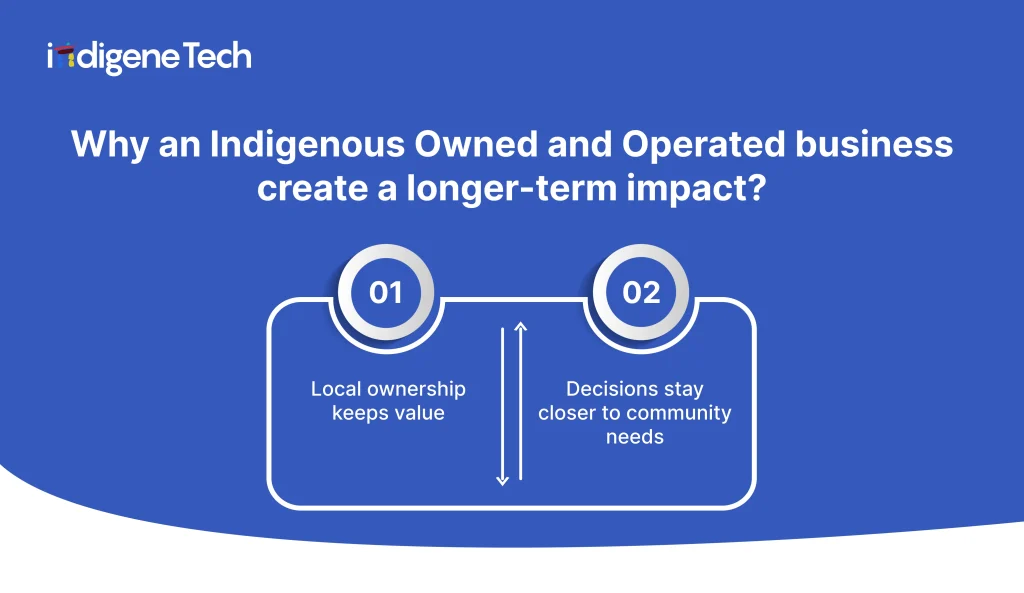
1. Local ownership keeps value
When ownership is local, more value stays local too. Payments support local jobs, local training, and local vendors. Skills do not leave after delivery. They remain in the ecosystem.
This also helps with future work. The next update costs less because knowledge is already here. Teams do not start from zero each time.
2. Decisions stay closer to community needs
Distance creates guesswork. Closer work reduces it. When teams listen early, they design fewer wrong screens and fewer confusing steps.
They also plan for the long run. Clear handover. Simple admin tools. Support that does not disappear after launch. That is how a project stays alive, not just launched.
Certified Indigenous Business in Canada: What it usually tells a buyer?
When a buyer sees the words Certified Indigenous Business, they usually think one thing first. “Okay, this vendor is verified.” It helps because many projects have rules around supplier lists, shortlisting, and reporting.
Certification is not a promise that every project will be perfect. It is more like a trust signal. It tells the buyer the business meets a defined ownership and control standard. Then the buyer can focus on the real stuff, like past work, delivery plan, and support.
1. What “certified” can mean in Canada?
In simple terms, it means someone has checked the business details, and the business qualifies under that program. It often matters in government work, larger enterprise projects, and any bid that needs supplier proof.
For the business owner, it also creates consistency. You do not have to explain your status from scratch on every call. The paperwork is already sorted.
2. Where buyers can verify certification?
Buyers should verify through the official certification body or directory linked to the program they follow. Many teams keep a screenshot or a directory record in the procurement file. It saves confusion later.
A quick tip. Ask the buyer what program they use for verification, then share the exact listing details that match it. This keeps the process clean and fast.
How certification supports trust in projects?
You may still see the term certified aboriginal business in some Canadian forms and tender documents. Many teams use older wording, but the intent is the same. They want to know the business is verified, before they move ahead.
This matters because tech projects handle time, money, and sometimes sensitive data. Buyers want fewer surprises. Certification helps reduce basic doubts, so the conversation can move to delivery, timelines, and real outcomes.
1. Why does certification matter in vendor shortlists?
Shortlists are often made fast. Teams may have ten vendors and only time to review five. A certified status can help a vendor reach that shortlist, especially in public sector work.
It also protects the buyer. They can show due diligence if someone audits the procurement later. This is practical, not personal.
2. Proof points buyers look for
After certification, buyers still check capability. They look for a portfolio that matches the problem, not only nice design. They look for clear steps, like discovery, build, testing, and handover.
They also look for support. Who will answer after launch, how fast, and with what process. That is where trust becomes real.
How Indigenous operated teams work in a practical and community-ready way?
A project feels easy when the team is easy to work with. Not flashy. Just clear. Many Indigenous Operated teams work with that mindset. They keep things grounded, and they do not treat people like “users” on a slide.
This matters a lot in Canada, where projects can involve many groups. Community leaders. Program staff. Youth teams. Elders. Sometimes a small business owner who is also doing five other jobs. A good team keeps the process simple, so people can actually participate.
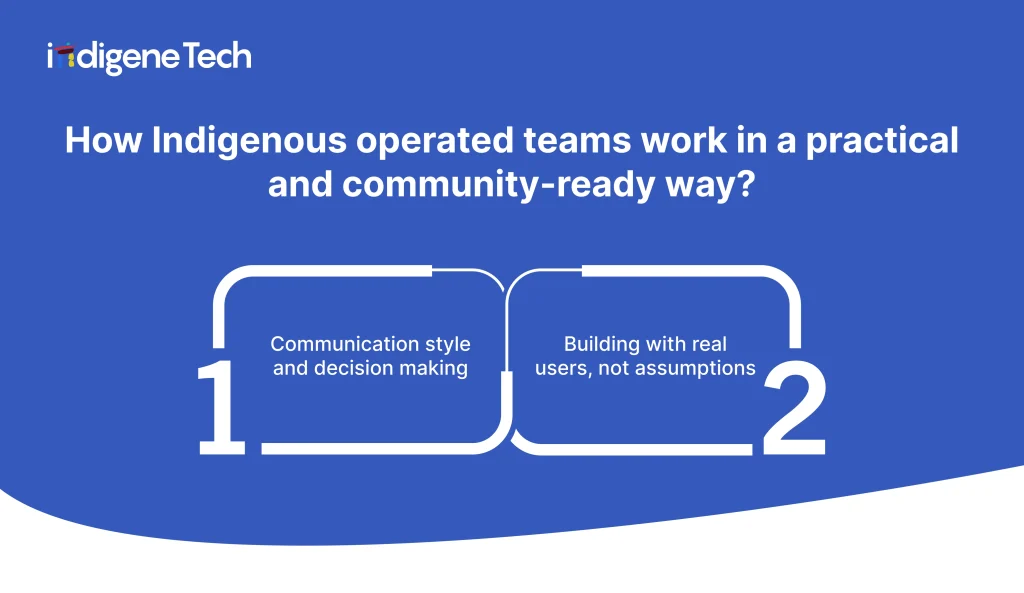
1. Communication style and decision making
The best teams talk in plain language. They share short updates. They write down decisions. They do not hide risks. If something is delayed, they say it early.
They also keep approvals simple. One screen, one decision. Not twenty screens at once. This saves time and avoids confusion.
2. Building with real users, not assumptions
Community-ready tech needs real testing. On real phones. In real settings. Even five quick test sessions can show what is broken.
A good team will test things like sign-up, OTP, form fill, and payment, if needed. They will also check slow internet and older devices. This is how the build stays practical, not just pretty.
Economic sustainability: More local jobs, more local skills, more retained spending
Economic sustainability is simple. People get work. People learn skills. Money stays in the local loop, instead of leaving the area the moment a project ends.
Tech can support this in very practical ways. Better booking systems reduce missed appointments. Better online forms reduce repeat visits. Better websites help local businesses get found and sell more. If you want a related read, link this line once to digital tools for Indigenous entrepreneurs.
1. Skills transfer during delivery
A good project should leave behind skills, not only a product. Ask for short training sessions for staff. Ask for simple admin guides, not big PDFs. Also ask for “shadowing” during launch week, so your team learns by doing.
2. Long-term support that does not vanish after launch
Launch day is not the finish line. Small fixes will come up. Password resets, role changes, new forms, new pages. A steady support plan keeps the tool running, and it saves you from rebuilding later.
How does social sustainability help services fit real needs, not just fancy features?
Social sustainability is about people feeling included. Not confused. Not judged. Just able to finish what they came to do. In tech, this starts with respect. Simple screens. Clear words. Calm flows.
Many good projects fail here. The feature list looks big, but the real user cannot complete a form without help. Then staff start doing workarounds. Paper lists come back. Calls increase. Trust drops.
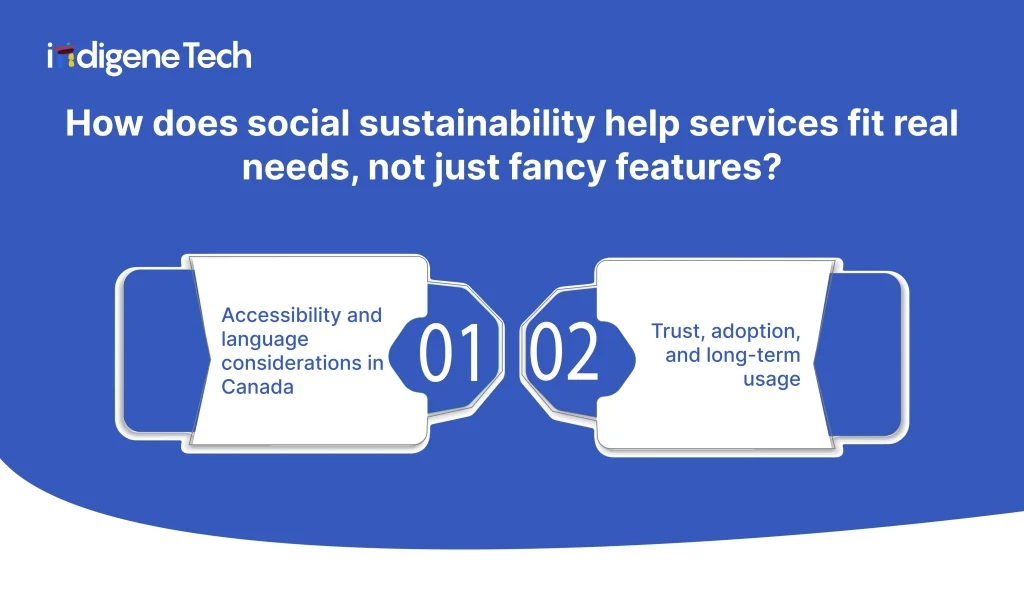
1. Accessibility and language considerations in Canada
Canada has many users with different needs. Some use screen readers. Some have low vision. Many use older phones. Some prefer French. Some prefer local community language support in parts of the experience.
So keep pages light. Use large buttons. Use short labels. Make error messages kind and clear. Accessibility is not extra work. It is work.
2. Trust, adoption, and long-term usage
People return when the system feels safe and steady. Show what happens next, after every step. Confirm submissions. Send clear updates. Make support easy to find.
Also, do not collect extra data “just because.” When people see you ask only what you need, they trust the service more.
Environmental sustainability: How digital can cut waste without cutting corners?
Environmental sustainability sounds like a big topic. But in day-to-day work, it is often small waste that adds up. Extra paper. Extra travel. Extra rework because the first attempt failed.
Digital tools can reduce this waste. Only if they are designed well. If the tool is slow or confusing, people go back to printing forms and making repeat visits. Then nothing improves.
1. Less paper, fewer trips, smarter scheduling
Online forms can reduce printing and scanning. Digital receipts cut paper slips. Booking and reminders reduce missed visits, so people do not travel twice for the same thing.
Even simple scheduling helps. If staff can plan routes or appointments better, they avoid extra driving. That saves time and fuel.
2. Practical green choices inside digital products
Keep the product light. Fast pages need less data and load quicker on weak networks. Avoid heavy videos unless they are truly needed. Use compressed images. Cache smartly.
Also decide data retention early. Store only what you need, for only as long as you need. Less stored data means less risk and less waste.
Data and privacy in Canada: Why responsible Indigenous Owned and Operated tech business matters more now?
Many sustainable projects collect personal details. Name, phone number, address, sometimes even health or education info. If this data leaks, people lose trust fast. Then the tool becomes useless, even if the design looks good.
In Canada, a common baseline for private-sector privacy is PIPEDA. The Office of the Privacy Commissioner of Canada also shares a clear Privacy Guide for Businesses that explains key duties like meaningful consent and privacy breach requirements.
1. Privacy basics. Consent, storage, access.
Keep it simple. Collect only what you truly need. Tell people why you are collecting it, in plain words. Store it safely, and give access only to people who must have it.
Also plan for mistakes. Have a basic breach plan. Know who will act first, and how you will inform users if needed.
2. Working with sensitive community data
Some data is sensitive because of the context, not just the field name. Even a “program enrolment” list can create harm if shared wrongly. So decide early who can view reports, how long logs are kept, and where backups sit.
Put these rules in writing. When privacy is clear, teams work with more confidence. Users also feel safer, and that is what keeps adoption steady.
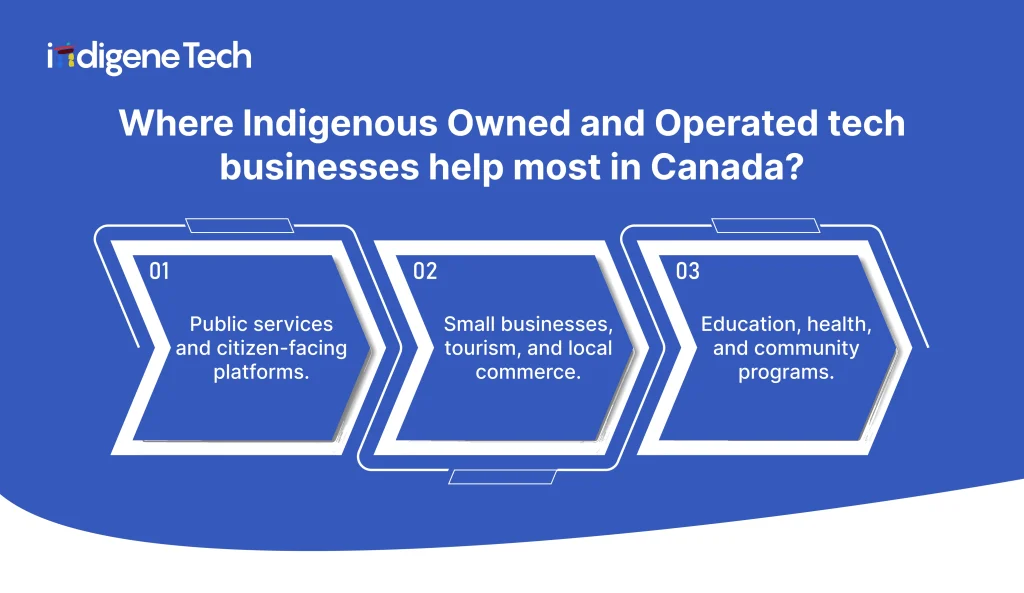
Where Indigenous Owned and Operated tech businesses help most in Canada?
The biggest impact comes when people use a service again and again. Not once a year. Think weekly bookings, daily updates, or regular forms. This is where small fixes create big change.
If you want a supporting internal read here, you can link this line once to Indigenous tech solutions shaping innovation.
1. Public services and citizen-facing platforms.
These are the services people depend on. Booking, permits, program applications, community notices, and support requests. The goal is speed and clarity. Mobile-first screens, clear steps, and quick confirmations help a lot.
2. Small businesses, tourism, and local commerce.
Local businesses need simple tools that bring in steady work. A fast website. A booking flow. A quote form. A small loyalty or preorder system. These are not “nice extras.” They can change cash flow in a real way.
3. Education, health, and community programs.
These projects need care. They often deal with sensitive info and real-life stress. So the tech must be calm and predictable. Clear consent. Clear next steps. Easy support.
Even small tools help here. Intake forms. Scheduling. Secure messaging. Progress tracking. When the basics work well, staff save time, and people feel supported.
Procurement in Canada: How to support outcomes, not just paperwork?
Procurement sounds like a back-office thing. But it decides who gets to build, and how fair the work stays. If buyers want sustainable development outcomes, they need buying rules that support them, not block them.
For federal buying, CanadaBuys explains the Procurement Strategy for Indigenous Business (PSIB) and how it fits under Indigenous considerations.Use this link once in this section, so readers can check the exact policy language.
1. Public sector: How procurement can include Indigenous suppliers?
Start with clarity. Write requirements that match real needs, not a dream list. Keep the scope tight, and judge vendors on outcomes and delivery plans, not only on long forms.
Also keep timelines practical. If a bid window is too short, smaller teams get pushed out. Then the same few vendors win again, even if they are not the best fit.
2. Private sector: How to build fair, long partnerships?
Private buyers have more flexibility. So they can move faster and still be fair. Pay on time. Avoid unpaid “sample builds.” Share constraints early, like budgets and deadlines.
Good partnerships also plan for after launch. Support, small fixes, and training. That is where sustainability shows up in real life.
How to choose the right Indigenous Owned and Operated tech business in Canada?
Pick a partner the way you pick a long-term dentist. You want someone calm, honest, and good at the basics. Big words do not matter if the work feels messy after week two.
Also, choose based on your real setting. Remote users. Older phones. Many approvals. Sensitive data. The right partner will ask about these things early.
Questions to ask on the first call
Ask simple questions that show how they work.
- Do you test with real users, not only internal staff?
- How do you handle privacy and access control?
- What happens after launch, and what support looks like?
- Who owns the code and the data at the end?
- How do you train our staff, so we are not stuck later?
Good answers are short and clear. No dodging.
What to review in portfolios and case studies?
Look for projects like yours, not only beautiful ones. Check if they have built portals, forms, booking flows, or mobile-first systems. See if they mention testing, rollout, and support.
Also check if they can explain the result in plain words. Like, “we reduced missed appointments,” or “we made onboarding faster.” Outcomes matter more than features.
Red flags that waste time and budget
These are common red flags:
- They promise everything, but show no clear plan.
- They do not talk about testing or handover.
- They avoid privacy questions or give vague replies.
- They push a huge scope before understanding the real problem.
- They cannot explain timelines in simple steps.
Common misunderstandings related to Indigenous owned and Indigenous operated businesses. And the simple truth.
People want to do the right thing. But a few myths still come up. These myths slow down good decisions and keep projects stuck in “planning mode.”
Here is the simple truth behind the common lines we hear.
“It will cost more.”
Not always. What costs more is a project that needs rework, or a tool that nobody uses. When a team tests early and keeps scope clear, budgets stay under control.
Also think long term. If staff need less support and fewer fixes after launch, you save money month after month.
“They only do small projects.”
Project size is not the real point. Delivery is. Some small teams run tight processes, ship clean work, and give steady support. Some large teams move slowly and add layers.
So judge the plan, not the headcount. Ask who will actually do the work, and how they will manage changes.
“It is just a checkbox.”
It becomes a checkbox only when you treat it like one. If you choose a partner for real outcomes, and build a respectful working style, it becomes a real advantage.
A good partnership creates trust, better adoption, and results that last beyond launch week.
Also, read: How To Showcase Your Indigenous Business To a Global Market
Conclusion
Sustainable development in Canada is not only policy talk. It is real people trying to finish real tasks. Book an appointment. Apply for support. Run a local business. If the tech fails, people lose time and patience.
Indigenous owned and Indigenous operated tech work can help because it stays closer to the place where impact lands. It pushes simple design, real testing, and steady support after launch. That is what makes projects last.
If you want one simple next step, pick one service you want to improve. Then run a small pilot for 30 days. Track completion rate, support calls, and repeat use. If those improve, you will know the project is moving in the right direction.
FAQs
1. What is the difference between Indigenous owned and Indigenous operated?
“Owned” means who has ownership and control of the company. “Operated” means who runs the work day to day. Both matter. Ownership affects where value and decisions sit. Operations affect how the project is managed, tested, and supported.
For buyers, the simple move is to verify both. Then judge the team on fit and delivery.
2. Can a Certified Indigenous Business work with non-Indigenous partners?
Yes. Many projects need extra specialists. Payments, security, design, or hardware setups. Partnerships are normal in tech.
What matters is clarity. Who is accountable? Who owns the main delivery. Who handles support after launch. Get this written in the plan, so there is no confusion later.
3. How can Canadian startups support Indigenous tech suppliers early?
Start small and start clean. Share a clear brief. Keep the scope tight. Pay on time. Run a short pilot, then measure results for 30 days.
Also, be fair with timelines. Do not ask for free “sample builds.” If you want a test, pay for it. This builds trust fast and sets the tone for long-term work.